The honest ranges for eastern Williamson County (2026)
Foundation bids look opaque, but they’re built from a small number of unit prices. Around Taylor, Hutto and the blackland corridor east of I-35, these are the real numbers:
| Work | Typical range |
|---|---|
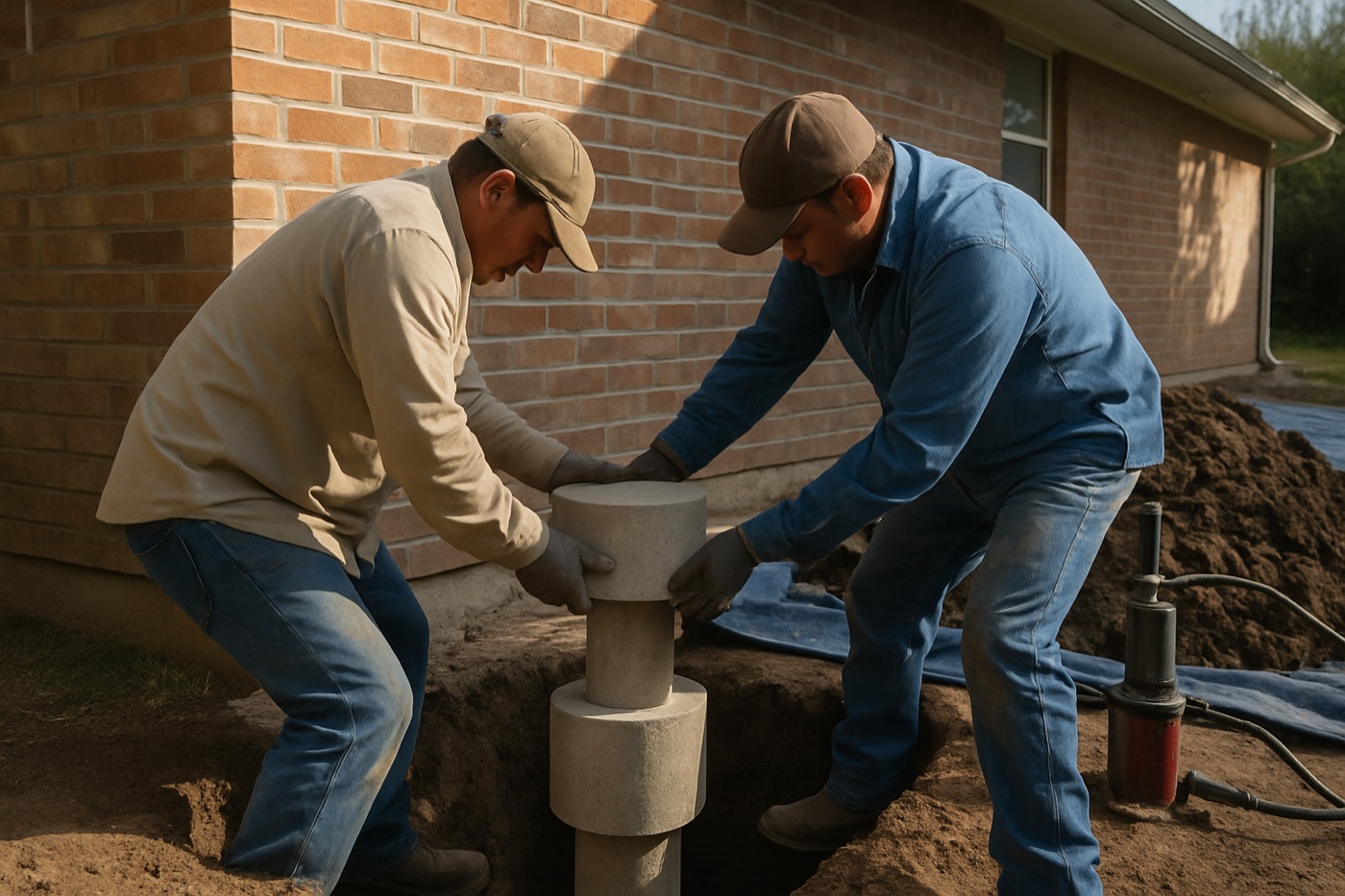
| Pressed concrete piers (per pier, installed) | $350 – $550 |
| Steel piers (per pier — deeper, for heavy or bad-soil cases) | $550 – $900 |
| Typical slab repair job (8–15 piers, one side settling) | $3,500 – $8,500 |
| Pier & beam releveling (shims, sistering, new supports) | $1,500 – $5,000 |
| Drainage correction (grading, French drains, gutters routed) | $1,500 – $5,500 |
| Mudjacking / polyfoam under sunken slab sections | $2,000 – $6,000 |
How to read a bid like a contractor
Multiply the pier count by the unit price and see if the total makes sense — that’s the whole trick. A 12-pier pressed-concrete job at $450 a pier is $5,400; if the bid says $11,000, something else is in there and you should ask what. Watch for the two classic inflators: pier-count padding (piers specified along walls that aren’t moving — get the elevation map and make them justify each one) and steel upsell (steel piers are genuinely better in some soils and under heavy masonry, but plenty of Taylor ranch homes do fine on pressed concrete at 60% of the price). A reputable outfit will hand you the elevation survey and walk you through why each pier is where it is.
Why blackland clay makes this a when, not an if
Taylor sits on Houston Black clay — soil that swells when wet and shrinks hard in drought, cycling your foundation up and down season after season. That’s why the east side of the metro has more foundation work than the limestone west side, and why drainage is half the battle: a $2,500 drainage correction that keeps the clay evenly damp often does more for a mildly moving house than $8,000 of piers, and every honest assessment should consider it first. It’s also why cheap fixes fail — piers set shallow in active clay just ride the same elevator.
When the right price is zero
Hairline cracks in drywall or brick veneer after a drought summer don’t automatically mean structural movement. Doors that stick in August and free up in October are the clay talking, not the foundation failing. This is why we start with a free assessment and an elevation reading rather than a sales pitch: if the readings are within tolerance, the honest answer is “water the perimeter, fix the gutters, and re-measure next year” — and it costs you nothing. Get that reading before anyone talks you into piers, and keep the report; a documented baseline makes every future decision easier.
Common questions
What does a foundation inspection cost in Taylor?
A free evaluation by a repair company suits routine concerns; for transactions and warranty documentation, an independent structural engineer report runs $400–$700 and carries weight with lenders, buyers, and builders.
Is a repair company's free evaluation biased?
It can be — they'd like the repair work. That's exactly why real measurements matter more than opinions, and why big decisions deserve the independent engineer. An honest company will tell you when nothing's wrong; that's also how you know you've found one.
The seller says the cracks are cosmetic. Should I believe them?
Believe measurements, not adjectives. An elevation survey either shows a foundation within normal tolerance or it doesn't — and it costs a fraction of your option fee.
What paperwork should come with a previously repaired foundation?
The repair company's pier placement map, the transferable warranty document, any engineer's reports, and permits. Missing paperwork isn't necessarily disqualifying, but every missing piece is negotiating leverage.
Get a free foundation assessment
Describe what you're seeing. A foundation specialist will call you back to schedule a free evaluation — usually the same day.
Got it — expect a call back shortly to set up your free evaluation.